Public Art
The Giving Tree
Artist: Dr. Julie Nagam
Toronto, ON
2021
This public art proposal is inspired by the Indigenous concept of the giving tree, which is a tree that “held supplies in its massive trunk and branches; those in need could reach into the depths of its hollow and pull out what they could use on the premise that they refill it with something else to leave behind for others. It was also a place where people could leave messages to communicate with each other. It is a story to tell children before bed, to pass on values such as respect, strength, sharing, love, tolerance, balance, caring, courage, honesty, and patience, which are all embedded in generosity of spirit. If you are a parent or a caregiver, you hope that your young people will take away and mobilize half of these concepts in their adult lives. The giving tree invokes the spirit of generosity through the fundamental values of environments of reciprocity, kinship, long-term relationships, exchange and community-based practices.” For this public art proposal, I have brought together the idea of the willow tree as the foundational concept of the artwork integrating the existing framework of the building.
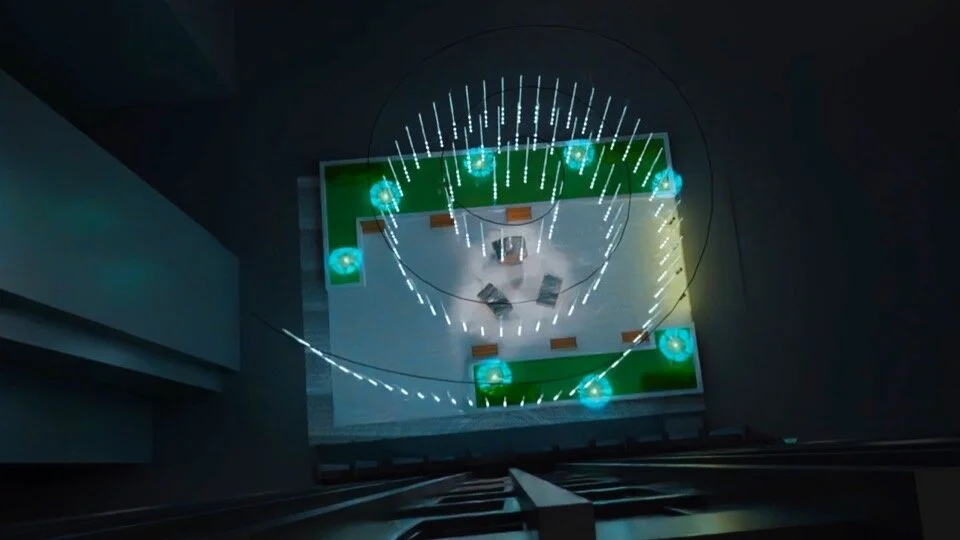
The canopy of the tree is the focus of the light installation where the branches are recreated in LED lights that are based on a golden spiral grid. The grid will be suspended on cables to support each hanging light branch. Each light reflecting the care and importance of the tree and the life it gives to urban based folks. This kind of care and comfort will be both inviting and spectacular from the ground or the building looking down. Trees carry histories of the space and provide protection for humans and animals; as we continue to construct more buildings in the physical space, it’s important for dense urban spaces to remember this symbiotic relationship, the growth of support of the willow tree and historical routes in the Toronto area.
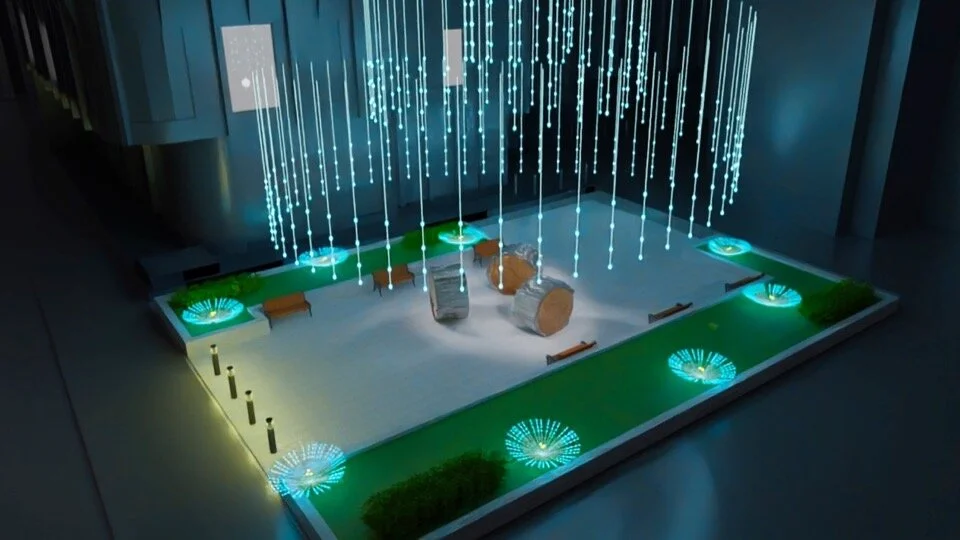
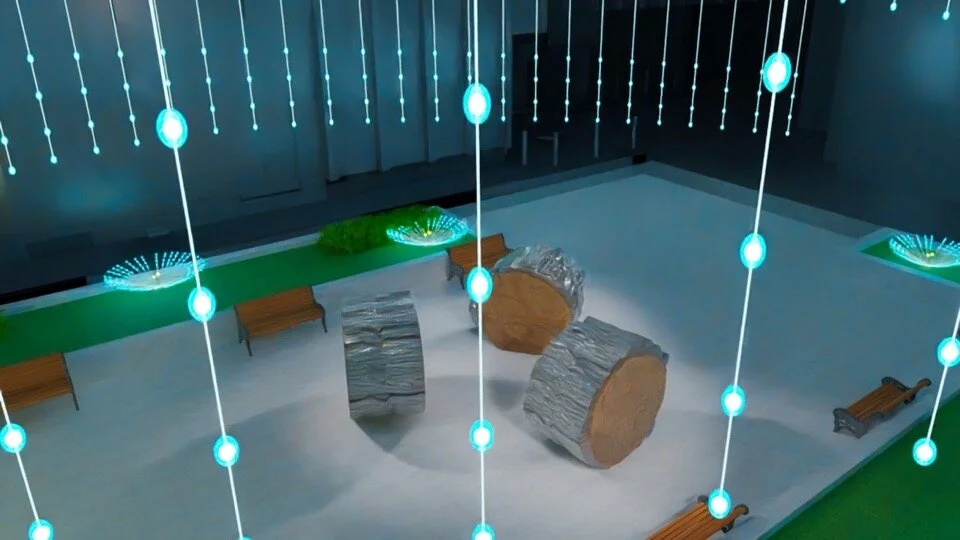
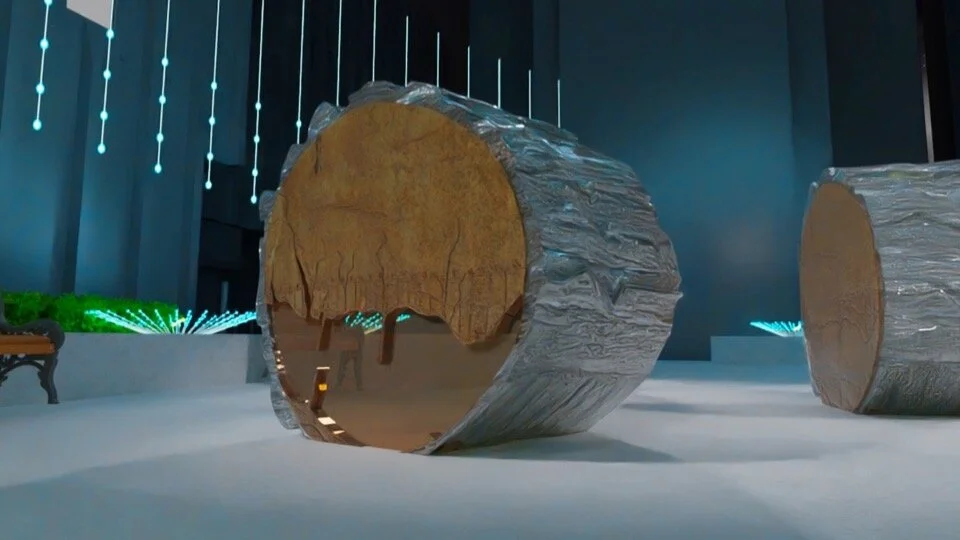
The base of the tree is represented in the wood cuts and will reflect the history of the trading routes, which is seen in the historical maps. Some of this historical framework around the routes were a big part of my past PhD. and grounded in this research. The twenty-two-mile North-South road of Yonge Street, which was completed in 1795/96. This road is the center baseline of the City of Toronto. The next substantial route was Dundas Street, and this street does not fit into the grid system and it flows through the city differently because this path was well used by Indigenous people, later traders and finally the military, many of the first roads that were “built” were based on existing trails. Later this was of course overlaid with the official grid of the settlement plan. Davenport Road is the path that was the shoreline of Lake Iroquois, and Dundas Street was a trail along another small river system that was fed by Lake Iroquois draining to Lake Ontario. All three of these roads do not fit into the planned settlement grid of the city. They moved through the river system, the Great Lakes and smaller tributaries. Beginning in the East and moving West: the Rouge River, Don Valley, Yonge Street, Garrison Creek, Humber River, Mimico Creek, and Lake Ontario, the maps are the way people navigate through space, exploring ideas of displacement anddisruption through the social, cultural, and architectural evolution of the city of Toronto. Each person that comes or has belonged to the area of Toronto will be able to engage with this artwork on a personal level.
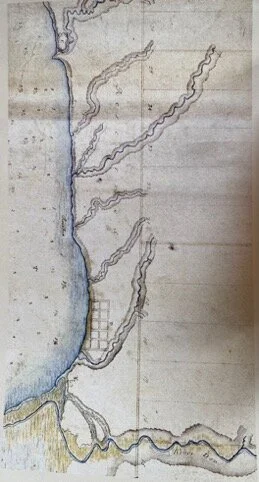
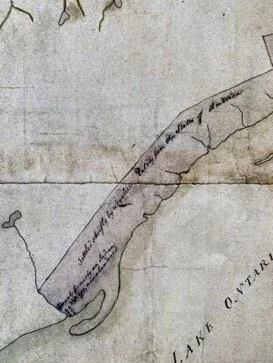
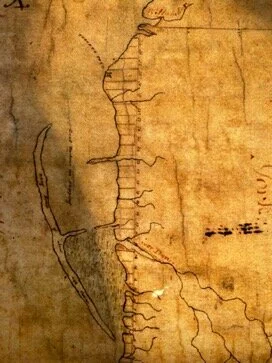
Each wood cut will hold a map and the centre woodcut work will have some text about the space and the maps of the routes for the visitor to engage with for some context of the artwork. Each cut will be fabricated in wood with a high sheen copper/bronze that the viewer will see themselves reflected in, implicating visitors in the history of this place while they witness the routes that have deeply impacted the growth and development of the city. Additional components such as benches, planters, or other features within the area – which could include Indigenous plants in the greenspace as well - could be added by drawing on the design and materials in this proposal.
The artwork will be constructed of a wood material on the wood cuts with the outside reflective metal that would be bronze/copper CC with the maps embedded into the metal. Each work will sit about 9 feet in height, with a circumference of 28.27 feet. The size of these works could be scaled up or down if needed, but are estimated at this size to be at a slightly greater than human scale. The light work would be LED lights that will be suspended on armature.